Category: Advanced

The virtues of Light Sport Aircraft

A confession – I own an LSA, Light Sport Aircraft – a Czech Sportcruiser which I’ve flown for 15 years, and have no regrets. So not surprisingly, from time to time, I extol the virtues of LSA’s. What’s the story?

The LSA category was devised in the USA by the ASTM. These are conventional aeroplanes – not microlights and you fly them on a regular PPL with an SEP rating. They have a maximum take off weight of 600 kg, and many are restricted to day VFR only. In Europe, the applicable design standard is CS-LSA, which was largely copied from the USA standard. Confusingly, near-identical aircraft from the same manufacturer may be certified as microlights (MAUW 450 or 600 kg), LSA’s (600 kg) or VLA’s (750 kg).

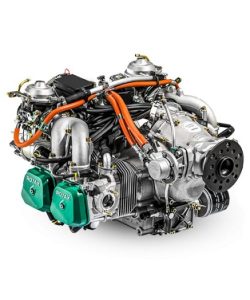
So what are the advantages of LSA’s? Firstly, they are relatively modern and typically equipped with glass cockpit (EFIS and EMS). Most are equipped with (non-certified) GPS and many have an autopilot. The majority of models are manufactured in Eastern Europe, which has a strong heritage in light  aircraft construction, and where the manufacturing costs are lower. Most LSA’s are powered by Rotax engines. These are less costly to operate than conventional Lycoming or Continental engines: maintenance is simpler and less frequent, and they consume less fuel per hour. They can (ideally, should) be run on unleaded Mogas, which is far cheaper than Avgas. The Sportcruiser, for example, burns 18 lph, cruises at 100 knots and has a range of 650 nm!
Are there any disadvantages to LSA’s? Because they are lightly built, some pilots find them skittish in turbulence, but that’s really a case of becoming accustomed, and using appropriate control inputs. The MAUW of 600 kg may be a constraint – it’s not an aircraft for two hefty pilots who have consumed too many pies or who want to carry loads of luggage. The Sportcruiser suits me for solo flights, day trips with friends and family, and short trips away from home with several overnight stops. As with any aircraft, decide what your mission is, and purchase something fit for that purpose. Although many LSA’s are quite capable of flying in IMC, the certification normally does not allow this. Depending on the certification (some operate on a CAA Permit, others on a Restricted Type Certificate) you need a suitably qualified maintenance engineer – but don’t worry, there are plenty in both categories.

As an instructor, I should address their suitability as training aircraft? Again, there are pro’s and con’s.

A sleek, modern, EFIS equipped aircraft is going to be attractive to potential flying school students, and will be inexpensive to operate, with relatively few maintenance surprises. But being modern and recently built, the capital investment is greater than for a tired Cessna or Piper spam-can; there are few low priced second-hand LSA’s on the market. MAUW may be a constraint, although a realistic training sortie does not need anything like full fuel, so fuel load can be traded for pilot and student weight

The most important consideration for training is robustness. LSA’s are popular training aircraft in the USA, where they operate off paved runways. . I would be cautious using LSA’s for ab initio training on some of the UK’s bumpy grass runways. My teaching technique for landings would be more interventional – an LSA would not be happy with the heavy or bounced landings which students occasionally make during circuit training. However, they would make excellent hire aircraft for competent hour builders. If considering an LSA as a trainer, it would be worth investigating their track record, and particularly how the undercarriage is constructed – sprung steel being more forgiving than a composite fibre-glass undercarriage.

So there you have it – a great aircraft to own, to use on trips, and with care a potential training aircraft. If you’re considering buying one, get advice from someone who has operated them. I’d be glad to help.

Buying an aircraft share – eyes wide open

So you’ve got your PPL. Congratulations.  Now you want to buy an aircraft share. What do you need to think about? I’ve tried to summarise key considerations in this blog but the most important advice is to avoid an impulse buy, and get advice – your instructor may be a good starting point n how groups work, and a licensed engineer may be able to help on the technical and mechanical aspects.

Firstly the aircraft – is it what you need?

What is your ‘mission’ and is the aircraft suitable for that. Local bimbling or hour-building on your own, VFR touring with family, IFR training and flights will each set different requirements. If it doesn’t meet your needs, you’ll get frustrated. If it exceeds your requirements by a long way, you are paying for capability you don’t use.

Is it a match for your abilities? A modest step-up is a reasonable ambition, but  a big ‘step-up’ in performance or complexity may require a lot of additional training and mentored flights before you can head off on your own. The insurance company may also set a certain level of experience.

If you are considering something more exotic that a Cessna 172 or a PA 28, do your homework  – find out about handling characteristics, known issues, maintenance costs etc. See and buy before you fly. If you’re starting a group, then follow all the advice about buying an aircraft outright – pre-purchase inspection, through review of maintenance records etc.

Secondly the budget – how much can you afford to spend?

Always buy comfortably within your means. With the best will in the world, there will be unforeseen costs, even in something as routine as a 50 hour check.

In most groups, you will pay a lump sum for your share, a fixed monthly charge to cover fixed costs like hangarage, insurance and annual maintenance, and an hourly rate which typically covers oil, fuel and the 50 hours maintenance checks. But some groups have different arrangements which may be more or less advantageous to a frequent or infrequent user.

Ask how the group funds upgrades and replacements. An inevitable big cost is the periodic engine replacement. Current regulations allow you to run an engine past TBO hours and calendar life, subject to annual checks, but the older an engine gets, the more likely that something can go wrong. A well-run group will put aside money from the hourly rate to contribute to an ‘engine fund’, and may have a fund to replace old tech with new. If that is not the case, I would shy away from an aircraft with a very high hours engine.

If you are the rookie pilot, the insurers may increase the premium and a group may expect you to cover the difference.

Thirdly the group – what is the group ethos? Sharing with like-minded people is important to avoid friction and disappointment later.

What is their attitude to upgrades and non-essential repairs? Are they a group who want to fly as cheaply as possible, and if that means a  scruffy aeroplane, so be it. At the other extreme, are groups owning a cherished asset to be handled with kid gloves. A happy medium is a group which wants their investment to maintain value and are they willing to upgrade things periodically. If your ambitions and skills are different to the others, you may have different views on non-essential repairs, upgrades and investments.

Understand how much  the other group members fly. For you, the ideal might be members who don’t fly much but always pay their bills. On the other hand, several frequent users might impact your plans, and a fair booking system will be essential.

Some groups are highly social, which means potentially you have a buddies with whom to share the cost and pleasure of flying. Does that matter to you? Do they have a preferred instructor for training and checkouts, or better still an instructor who is a group member?

 Fourthly, where is it based?

An aircraft close to home will get flown more than one which is an hour’s drive away. Is the airfield suitable for your kind of flying – do you need access out of hours, the ability to land at night and in all weather? What landing fees are you going to be paying?

Fifthly, understand the group rules

There are many things to consider here…… the group’s currency rules? How are decisions made? Does the group hold regular meetings? What paperwork and log-book keeping do you need to do? How are bookings made? Is there a fair use policy to ensure 1 or 2 people don’t hog the aircraft? Can you sell your share to anyone you choose, or does the group set the sale price and vet potential new members? Who manages the money and maintenance?

Many groups use a first-come first served online booking system but have some proviso to ensure fair use and allow members to take the aircraft away for longer trips.


Know your approach plates        

When flying an instrument approach in a test, you’ll know ahead of time which approach is to be flown and can prepare on the ground. In real life, you may not be able to prepare in advance, so know your way around the plate so that you can extract essential information quickly.

Some pilots use unwieldy and generally unmemorable acronyms to brief the approach. I find that a flow, or visual scan, around the plate is a better way to self-brief. You can use a pen on the plate to highlight key information. The only elements requiring any maths are the approx. descent rate which varies with ground speed, and the all-important minima.

Presentations vary, but here is a ‘flow’ that works for the UK AIP plates.

Geo-referenced instrument approach plates

Aircraft with sophisticated GNSS (aka GPS) navigators may have approach plates installed in the database. SkyDemon offers a simple way of accessing geo-referenced plates. It uses the AIP plates (whose format varies from one country to another). Geo-referenced? This means that they are displayed to scale, in the right location on the map display.

They are a great aid for situational awareness and for coarse positioning on an instrument approach. They should not be used as a substitute for receiving the relevant radio navigation aid (VOR, NDB, ILS, GNSS) using NAV equipment such as a CDI (Course Deviation Indicator).

Here’s how to go about it:

  1. In Setup, Planning options, enable IFR features
  2. Right click on Airfield, right click on Information
  3. Click on Instrument Plates. Select the plate(s) you want. Green means they are available on your device. On some devices, you may have to click on individual plates to make them available offline
  4. In flight, click on the Airfields tab. Click on the Pin symbol to display the plate you want. It appears to scale on the chart.

LSA’s in Europe (again)

It’s the middle of summer, with travel plans made or indeed already flown.  I’m returning to the question of permits for UK registered factory built LSA’s (i.e. UK Permit aircraft), which cannot be operated freely in EU members states without specific permissions. Below is a list of the permission requirements and processes for different countries:

SWEDEN – apply at  https://www.transportstyrelsen.se/en/Forms/Aviation/Airworthiness/Application-for-permission-to-fly-within-Swedish-airspace-with-foreign-registered-aircraft-which-has-not-an-approved-ICAO-CoA-or-EASA-Permit-to-fly1/

IRELAND – fill out form 138C: https://www.iaa.ie/docs/default-source/publications/forms/airworthiness-application-forms/awsd-f-138c-rev-2.pdf?sfvrsn=c4ab0df3_20  with copies of Certificate of Registration, UK CAA flight permit, permit conditions (form 18B and the Datasheet). Send to  arc@iaa.ie  If o response, contact Ruth Bagnell, Aeronautical Inspector, Tel.: + 353 1 603 1463, Mob: + 353 87 279 8054, Ruth.BAGNELL@iaa.ie . There is no fee and the permit was for 12 months.

FRANCE – Step 1….. Go to https://redevances.dcs.aviation-civile.gouv.fr/index.php/laissez-passer-permit-to-fly.html/ and select “Validation d’un certificat étranger – MTOW < 5,7. create an account and reply to the confirmation email. Then pay 50 euros online. Take a screenshot of the payment page in case the pdf receipt by email gets lost (it takes several hours). Step 2….. Download, complete and save form LP6. Google “France form LP6” to find it. Step 3…. Send form by email to dsac-nav-bf@aviation-civile.gouv.fr , with relevant aircraft documentation –  “Airworthiness document issued by the State of registry, along with the associated validity certificate and/or operating limitations =  UK Permit, the EASA form 18B and the aircraft Datasheet). Include the receipt for payment. The permit arrives in a few working days. Mine was valid until 7 days before permit expiry, so it’s a once per year exercise.

BELGIUM – go to https://mobilit.belgium.be/en/Temporary_permission_to_fly and download the application form. Fee 108 euros.

NETHERLANDS – use form ILT.231 here . When I applied, permission was refused because my aircraft is not one of the categories covered by the tick boxes on the form. The Dutch allow microlights into their airspace and also amateur built aircraft – both on the basis of the ECAC agreement- but not factory built permit aircraft. We have taken this up with the NL branch of AOPA who are addressing it with the Dutch NAA but there has been no progress.

GERMANY – apply here https://www.lba.de/EN/Operations/EntryPermissions/Restricted_Authorisation.html?nn=2099536. No fee, max 180 days. Two working days notice are required.