Category: Instructors

The virtues of Light Sport Aircraft

A confession – I own an LSA, Light Sport Aircraft – a Czech Sportcruiser which I’ve flown for 15 years, and have no regrets. So not surprisingly, from time to time, I extol the virtues of LSA’s. What’s the story?

The LSA category was devised in the USA by the ASTM. These are conventional aeroplanes – not microlights and you fly them on a regular PPL with an SEP rating. They have a maximum take off weight of 600 kg, and many are restricted to day VFR only. In Europe, the applicable design standard is CS-LSA, which was largely copied from the USA standard. Confusingly, near-identical aircraft from the same manufacturer may be certified as microlights (MAUW 450 or 600 kg), LSA’s (600 kg) or VLA’s (750 kg).

So what are the advantages of LSA’s? Firstly, they are relatively modern and typically equipped with glass cockpit (EFIS and EMS). Most are equipped with (non-certified) GPS and many have an autopilot. The majority of models are manufactured in Eastern Europe, which has a strong heritage in light  aircraft construction, and where the manufacturing costs are lower. Most LSA’s are powered by Rotax engines. These are less costly to operate than conventional Lycoming or Continental engines: maintenance is simpler and less frequent, and they consume less fuel per hour. They can (ideally, should) be run on unleaded Mogas, which is far cheaper than Avgas. The Sportcruiser, for example, burns 18 lph, cruises at 100 knots and has a range of 650 nm!
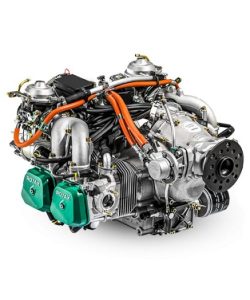
Are there any disadvantages to LSA’s? Because they are lightly built, some pilots find them skittish in turbulence, but that’s really a case of becoming accustomed, and using appropriate control inputs. The MAUW of 600 kg may be a constraint – it’s not an aircraft for two hefty pilots who have consumed too many pies or who want to carry loads of luggage. The Sportcruiser suits me for solo flights, day trips with friends and family, and short trips away from home with several overnight stops. As with any aircraft, decide what your mission is, and purchase something fit for that purpose. Although many LSA’s are quite capable of flying in IMC, the certification normally does not allow this. Depending on the certification (some operate on a CAA Permit, others on a Restricted Type Certificate) you need a suitably qualified maintenance engineer – but don’t worry, there are plenty in both categories.

As an instructor, I should address their suitability as training aircraft? Again, there are pro’s and con’s.

A sleek, modern, EFIS equipped aircraft is going to be attractive to potential flying school students, and will be inexpensive to operate, with relatively few maintenance surprises. But being modern and recently built, the capital investment is greater than for a tired Cessna or Piper spam-can; there are few low priced second-hand LSA’s on the market. MAUW may be a constraint, although a realistic training sortie does not need anything like full fuel, so fuel load can be traded for pilot and student weight

The most important consideration for training is robustness. LSA’s are popular training aircraft in the USA, where they operate off paved runways. . I would be cautious using LSA’s for ab initio training on some of the UK’s bumpy grass runways. My teaching technique for landings would be more interventional – an LSA would not be happy with the heavy or bounced landings which students occasionally make during circuit training. However, they would make excellent hire aircraft for competent hour builders. If considering an LSA as a trainer, it would be worth investigating their track record, and particularly how the undercarriage is constructed – sprung steel being more forgiving than a composite fibre-glass undercarriage.

So there you have it – a great aircraft to own, to use on trips, and with care a potential training aircraft. If you’re considering buying one, get advice from someone who has operated them. I’d be glad to help.

Flying an N-reg aircraft in the UK

I don’t own an N reg aircraft and I don’t hold an FAA licence, so to me these questions are a bit academic. But people do ask from time to time.

To answer the question fully requires an understanding of both UK (ANO) and USA (FAA) regulations, supplemented by legal opinion letters written by FAA lawyers on specific questions (they are rather good at this and opinions are formally recorded and available). Fortunately, Flyer David has studied all this thoroughly and his article is regarded by many as a definitive answer.

To address, briefly, the more common questions about N reg aircraft….

Can I own an N reg aircraft in the UK? Yes – but it must be formally owned by a US entity. There are companies that offer US trust arrangements.

Why might I consider owning an N reg? They may be cheaper on the market, and that is primarily because maintenance arrangements are (said to be) more flexible and cost effective.

Can I fly an N-reg in the UK on a UK licence? Yes. In fact, you MUST hold a UK licence to fly an N reg in the UK, if you are resident in the UK.

Can I fly it in the UK on an FAA licence? If you are a UK resident, No

What licence do I need to fly an N-reg outside the UK? You must hold an FAA licence.

How can I get an FAA licence? There are 2 routes.

  • Obtain a full FAA licence, in the USA, through the normal training and testing route. You must continue to hold at least an FAA class 3 medical to keep the FAA licence current.
  • Request an FAA 61.75 or ‘piggy-back’ licence, based on your UK (or other ICAO) licence. This is more cost-effective overall. It involves submitting paperwork in advance and entails a brief visit to the USA to apply. A 61.75 is valid with a UK class 2 medical (but not a LAPL medical).

How do I keep the FAA licence current? You must do a biennial flight review with an FAA authorised instructor. There are not many of these, so they may charge more than a local UK club instructor!

I’m an instructor. Can I instruct someone on an N-reg aeroplane? Yes, but only for UK ratings. There is no longer a requirement to get permission for this from the CAA / DfT.

How about ab initio training? Yes, that is also possible but you CANNOT send the student solo in an N reg, only in a UK reg.

Any other things for an instructor to be aware of? Yes, you should be familiar with FAA regulations since you are operating in accordance with both FAA and UK regulations (the more restrictive will always apply). If operating an N-reg on the basis of an FAA licence outside the UK, you must hold an FCC Restricted Radiotelephone Operator’s Permit – inexpensive and straightforward to obtain.

Popular myths & little known facts

In my conversations with students during training and PPL holders during rating re-validation, some interesting myths emerge. So let’s put the record straight on a number of air law and licensing questions.

  1. It’s OK to fly outside the W&B (weight and balance) envelope as long as you have checked it’s safe, e.g. by a test take-off on a long runway. FALSE.

The PiC is legally required to assure himself that he is operating within W&B limits. And how would you know it’s safe other than by operating within the limits given in the POH? The manufacturer has worked these things out.

TIP –  It is so easy to calculate W&B, either on paper, spreadsheet or in an app like Skydemon. Consider making a handful of standard calculations – e.g. myself, flight bag + full fuel; myself, flight bag, wife + 90 litres fuel (= MTOM) – to which you can refer.

  1. The bi-annual instructional flight (the ‘1 hour with instructor’) must be done in the last 3 months of rating validity. FALSE.

You can do it any time during the last year of validity. However, the instructor or examiner can only sign your rating revalidation if you have met all the criteria (12 hours, 6 hrs PiC, 12 take-offs etc etc), so you might need to get the signature a bit later.

TIPS – get your 1 hour done early and don’t wait till winter, when the weather can prevent you flying. if you’ve met all the re- validation requirements early in the year, you can get the rating signed off and preserve the dates. There is no fixed agenda for the bi-annual instruction flight. From a ‘duty of care’ standpoint, most instructors will want to revise stalls, steep turns and a PFL, but in principle the instruction can cover anything. Find something that’s useful for you, such crossing CAS, short field techniques, bad weather circuits, night flying, even some instrument flight. The choice is yours and it’s not a test. You can ask the instructor to teach or demo something, or perform the manoeuvre yourself.  

  1. If I forget to get my rating re- validated by signature, I can always ask an examiner or any instructor to back-date it. FALSE.

The signature must be made before rating expiry date. And if it’s an instructor signing, ONLY the instructor who did your 1 hour of instruction is entitled to sign (don’t ask me why) although ANY examiner can do so.

TIPS – enter your revalidation dates in your diary – at least one month ahead of time. Get the signature at the time of the instructional flight, if at all possible.

  1. In order to accumulate IFR hours towards a CB-IR, I can record all my flights in VMC as IFR. FALSE.

You can only fly IFR (even in VMC) if you are qualified to fly IFR, i.e. hold either an IR or (IR(R) (the UK IMC rating).

  1. I can fly a 3-axis microlight on a PPL(A) and the hours count towards the 12 hours required for SEP re-validation. TRUE.

BUT….. in order to do so, you must first undergo differences training (by a microlight instructor) and get this signed off in your log-book. AND… for SEP re-validation, the 1 hour with an instructor must be in a SEP, not in a micro-light.

  1. If I hold SEP and TMG ratings, I can re- validate both with 12 hours etc flight time in the last 12 months, on both or either class. TRUE.

The hours are in effect inter-changeable. BUT… be careful. If your TMG and SEP ratings have different expiry dates, you must accumulate the hours and get the signatures while both are still valid.  If either of them expires, you must take a test (an LPC) on the expired class.

  1. If I enter controlled airspace by accident by less than 0.5 nm, or less than 100 feet, it won’t be recorded as an infringement. FALSE

Entering CAS without clearance, by any distance or height – however small – is an infringement and you can expect the CAA to take some kind of action against you. Airspace infringements are what are called ‘strict liability offences’, i.e. intent is irrelevant. All the authority has to do is to show – on the balance of probabilities – that you infringed. Evidence includes their radar and your transponder mode C output. Arguing that your transponder is inaccurate won’t wash, unless can get an engineer’s report to prove the mis-calibration.

TIPS – Why fly that close to CAS and risk it? Apply the Take 2 Rule – remain 2 nm away from and at least 200 ft (I prefer 300 ft) below CAS.  Do a transponder calibration check before flight: set your altimeter to 1013 and check it agrees with the transponder FL display.

  1. I am allowed 45 days leeway to fly after my medical expires. FALSE.

You can do the medical 45 days before expiry and preserve the dates, but you cannot fly after it has expired. However……

TIP –  a Class 2 medical lapses into a LAPL medical on expiry. So depending on what you are doing, you might be able to fly on LAPL privileges after the Class 2 expiry date. But LAPL privileges will also expire eventually and LAPL privileges carry further restrictions (aircraft weight, number of passengers, no night or instrument flight etc).

  1. If in my bi-annual instruction flight, I fly quite badly, the instructor can refuse to sign-off the flight in my logbook. FALSE.

He / she must sign it. But they may make an annotation ‘Further training recommended’, and they will discuss with you what additional training is needed. You would be well-advised to pay heed!

TIP – use the instructional flight to practice something you wouldn’t normally do and as an opportunity to get some (almost free) advice. Consider booking the instructor for a couple of hours so that you have time for a thorough briefing and for subsequent discussion.

  1. A listening squawk entitles me to enter Controlled Airspace. FALSE.

A Listening squawk merely signifies that you are listening on a particular frequency. You are not getting a service nor a clearance. You might reasonably expect ATC to warn you if you get too close to CAS, but that’s not guaranteed (if they are very busy, for example).

TIP – make sure you have set the corresponding frequency and have the radio volume turned up enough. Listen out in case they call you up, either by call-sign or by ‘aircraft in the vicinity of …..’

What can I do next?

So you passed your PPL skills test and have a PPL licence. You’ve spent some time flying cross country trips in the UK, and maybe overseas. Perhaps you are seeking a new challenge and wondering what other qualifications you can add?

Some are more demanding than others, but here a list.

Pre-requisites Theoretical knowledge Minimum training Licence issue
Night rating None Ground school briefing 5 hours, incl. 1 hour dual cross-country & 5 solo take offs and landings Application form and fee to CAA
IR(R) or IMC rating 10 hrs PiC (incl 5 hrs cross-country) post licence issue Single theory exam (paper) 15 hours of which 10 hours FBSRI 25 hours post-licence issue (which can include the IR(R) training itself
Flight instructor (FI) for LAPL only PPL(A) + 10 hrs instrument training +

20 hr PiC cross-country + QXC 300 nm with 2 intermediate landings


30 hr SEP (of which 5 hr in 6 month prior to pre-entry test)

25 hr of teaching and learning;


100 hr TK


Pre-entry test +


30 hr flight instruction, of which 25 hr dual ; rest could be mutual flying with another FI student

Test (AoC)

200 hr total flight time of which 150 hr PiC

Flight instructor (FI) LAPL & PPL As above + CPL(A) or PPL(A) As above + for a PPL holder – CPL TK As above As above
Modular CPL 150 hours total flight time

Night rating (or can be done on CPL course)

ATPL / CPL theory completed prior to flight training Pre-entry test +

25 hours instruction, of which 10 hr instrument flying (unless an IR is already held)

At least 5 hours in 4-seat complex aircraft

Skills test

200 hrs total time (incl CPL training) of which

100 hr PiC

20 hr PiC cross country

Have chat with your CFI to figure out what would be the best option for you. And with that in mind, start building the required hours and cross-country experience.