

With summer temperatures rising to 35-40oC, many flying schools have curtailed activities completely, or limited flying to the cooler morning times.
What’s the big deal? There are three performance issues to consider – Human, Aircraft and Engine oil.
Human Performance
Heat can cause dehydration – but we can deal with that by taking regular cool drinks, but do so before the symptoms of dehydration kick-in: such as dizziness, a dry mouth, and fatigue. Even if well hydrated, heat is a stressor – it can reduce performance through distraction, lack of attention and so on. In a noisy cockpit, stressors like heat, noise, vibration etc add up.
With sensible precautions – staying hydrated and reducing exposure to direct heat sunlight – the heatwave is manageable, and we can avoid more serious consequences such as Heat Exhaustion and Heat stroke. Heat exhaustion (pale skin, profuse sweating, dizziness, headache, nausea, lethargy) resolves itself naturally within 30 mins in a cool place. Heat stroke (red skin, absence of sweating, body temperature > 40 deg C, confusion, lack of coordination) is a medical emergency which can result in seizures and loss of consciousness.
Aircraft Performance
This should be well understood. It depends on density altitude, which is determined by both ambient air pressure and temperature. For many aircraft, temperature effects can be calculated from performance tables in the POH. A 10oC temperature rise increases take-off run / distance by 7-10% (the UK CAA recommend a conservative 10% performance degradation factor). It reduces climb rate by a similar amount, but the effect is greater than this at higher altitudes – say above 4000 ft – and as you approach the service ceiling.
And remember that performance factors are multiplicative, not additive. If you’ re used to taking off at 5oC, at 35oC, the take-off run will be 1.1 x 1.1 x 1.1 = 1.33, i.e. 33% longer! All of a sudden that short grass home airstrip may prove to be not long enough! These performance factors explain why high altitude GA airfield have very long runways – look at Leadville Colorado, 1950 m long at an altitude of nearly 10,000 ft amsl.
Engine oil
We take oil for granted and it gets rather less attention than it should. Maybe I’ll write a separate blog on this. Every engine oil has to be effective over a range of operating temperatures. For ease of understanding, the oil grade is assigned a range of ambient temperatures (= on-the-ground) which take into account the operating temperatures in flight.
Many aircraft use monograde oils,.. The common 80 grade (= SAE 4 0) is valid from -17oC to +21oC. It provides adequate pumpability during cold starts, and good lubrication across the operating range. However, oil gets less viscous (‘thinner’) as temperature increases. During our +35oC heatwave, the lubricating effect will reduce but it is hard to find data on how serious this is.
What should we do if operating at higher ambient temperatures? Firstly, monitor oil temperature carefully when flying, especially in the climb. Secondly, consult the engine manufacturer’s guidance and your maintenance organisation. (To muddy the waters, engine manufactures’ and oil suppliers’ guidance may be slightly different!). It may be appropriate to change to 100 or 120 aviation grade oil (SAE 50 to 60) in the summer, even though maintenance cycles may not synchronise with the seasons! Thirdly, consider multigrade oil, such as 15W50 (if permitted), as these have almost unlimited ambient temperature ranges. The incremental cost of multigrade oil is small in the grand scheme of things, so why aren’t they used more widely? It’s probably down to a mix of conservatism, pass experience, the convenience of using a single grade, the rarity of higher temperatures in the UK and perhaps lack of knowledge.
 This is a bit of a niche topic of interest to owners of factory built (Part 21) LSA aircraft.
 The UK Met Office have launched a new weather app for GA pilots, which eventually will replace the GA Briefing Service. It’s been a long time coming – I remember them talking about it about 15 years ago when I visited the Met Office to research an article for Pilot magazine. It is a PWA (Progressive Web App) – which basically means that the web page adapts to a smart phone device. You don’t get it from Google Play or the Apple store, you simply open the website on your smartphone browser.


 The LSA category was devised in the USA by the ASTM. These are conventional aeroplanes – not microlights and you fly them on a regular PPL with an SEP rating. They have a maximum take off weight of 600 kg, and many are restricted to day VFR only. In Europe, the applicable design standard is CS-LSA, which was largely copied from the USA standard. Confusingly, near-identical aircraft from the same manufacturer may be certified as microlights (MAUW 450 or 600 kg), LSA’s (600 kg) or VLA’s (750 kg).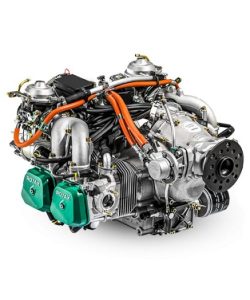
 A sleek, modern, EFIS equipped aircraft is going to be attractive to potential flying school students, and will be inexpensive to operate, with relatively few maintenance surprises. But being modern and recently built, the capital investment is greater than for a tired Cessna or Piper spam-can; there are few low priced second-hand LSA’s on the market. MAUW may be a constraint, although a realistic training sortie does not need anything like full fuel, so fuel load can be traded for pilot and student weight
 The CAA introduced e-exams in October 2020. Full details can be found here:

