Category: Regulation

UK LSA to France – update

This is a bit of a niche topic of interest to owners of factory built (Part 21) LSA aircraft.

The problem

Thanks to a long-standing ECAC agreement, LAA permit aircraft (i.e. amateur built) can be flown in most EASA states – see this LAA document for details.

However, this does not apply to factory-built (Part 21) LSA’s, operated on a UK CAA permit , which pre-Brexit were EASA Permit aircraft.

To fly these outside the UK, you need specific permission from each State. This is one of those unintended consequences of Brexit. The rules and cost for a specific permission vary, but generally you can get a multi-entry permit for the duration of either the insurance or the current UK permit. Here’s how to get a French permit:

Three simple steps

Step 1. Pay the fee here (the URL has changed).  On the web page, select “Validation d’un certificat étranger – MTOW < 5,7″. You will need to create an account and reply to the confirmation email to activate the account. Pay 50 euros online. Take a screenshot of the payment page in case the pdf receipt by email gets lost (it can take several hours to arrive ).

Step 2. Download, complete and save form LP6. Google “France form LP6” to find it or download it from here.

Step 3. Send this form by email to dsac-nav-bf@aviation-civile.gouv.fr , with copies of relevant aircraft documentation. They ask for “Airworthiness document issued by the State of registry, along with the associated validity certificate and/or operating limitations”. I sent the UK Permit, CAA form 18B and the CAA Aircraft Datasheet, which proved sufficient, plus the receipt for payment.

The permit arrives in a few working days. It is usually valid until the CAA permit expiry date, but can only be used for a maximum of 90 days cumulative visits in the permit period.

Other countries?

I’ve not checked extensively but I hear that Germany ‘s LBA will also grant access. Reading their documentation, it appears that the Netherlands authorities will not (I haven’t tried). The Isle of Man has an exemption for UK CAA permits – so no paperwork or permission required. It is not entirely clear whether the exemption in the Republic of Ireland for LAA permit aircraft also applies to UK Part 21 permit aircraft – we have asked the question.

Revalidating an SEP rating by experience

After the licensing review completed by the CAA in October 2025, revalidating a PPL  SEP rating by experience got easier, in one sense, but a little bit

more demanding in another.

Hours required

The old rules were 12 hours flight experience in the second year of validity of the 2 year rating – but bizarrely, none in the first year of validity.

The new requirement is still 12 hours total, but under the new rules these hours can be done over 2 years, which allows more flexibility and the opportunity to spread out the cost of flying. Specifically, the experience requirement over the 2 years is

  • 12 hours total time,
  • of which 6 hours PiC
  • including 12 take offs and landings as sole manipulator of the controls
  • a flight with an instructor of at least 1 hour

The new rules stipulate that at least 6 hours (not necessarily PiC) must be flown in the second year of rating validity, but the other requirements can be met at any time during the 2 years.

The biennial instructional flight

As guidance, the CAA have written GM2, AMC1 and AMC3  to FCL.740.A which can be found on their website here. The aim of the flight is to refresh little-practiced exercises, extend skills, and ensure that flying is safe and competent. There is a lengthy menu of potential topics and exercises  from which we can choose.

Exercises like stalls, steep turns , a practice forced landing and glide or flapless landings would normally be in the mix, as most pilots don’t practice them regularly. The CAA also expect TEM (threat and error management), the use of an MMD (moving map display) such as SkyDemon and partial power-loss scenarios to be covered. Some of these merit a thorough briefing. At my school, we typically do an hour of ground school before the flight itself, which may extend to more than an hour. The briefing often identifies gaps in knowledge, useful exercises, or indeed things the pilot avoids doing through lack of confidence. That’s all grist for the mill.

Other relevant tests

Previously, it was common practice to accept a pass in e.g. an IR or IMC rating revalidation test,  in lieu of the 1 hr SEP instructional flight. It is questionable whether this ever was permitted – the wording in according to the Regulations (FCL.740.A), perhaps badly drafted, suggested that it was not acceptable. To clarify things, the CAA have now stated that the 1 hr instructional flight CAN be combined with an IR or IMCR revalidation test BUT some elements of the SEP instructional flight must be included in that test.

Satisfactory standard

One much debated point is the need to achieve a satisfactory standard – without which the instructor should not sign off the rating revalidation page. In a TrainingCom sent to Instructors and Examiners, available here, the CAA defines ‘satisfactory standard’ as that to be expected during a PPL/LAPL skills test (LST). That has the status of guidance, but the CAA intend to issue further regulatory material as an AMC or GM later in 2026.

You may well ask how the instructional refresher flight differs from a test? In several ways, I think.

  • Firstly, a test is, in principle, a single attempt (pass / fail) for a comprehensive set of exercises without input from the examiner.  In the training flight, the exercises flown may – if necessary – be briefed beforehand, demo’d by the instructor and practiced by the candidate to achieve a satisfactory standard. Bear in mind, though, that a lot of demo and practice, will exceed the 1 hour minimum, but that’s fine – we can plan for that.
  • Secondly, the menu of exercises is not rigid. The flight will invariably comprise some essential safety-related exercises but the content should be tailored to the pilot’s experience, recency and needs. The context of the location may also be relevant. The need to fly accurate headings and altitudes, for example, is paramount in areas close to controlled airspace. Considerations for forced landings and partial power depend on the proximity to airfields and the nature of the landscape being flown over.
  • Thirdly, the flight is not necessarily a one-shot event. It is perfectly OK to do more than one flight and work with the pilot to improve his flying, if needed.
  • Fourthly, a successful test can be logged as PICUS (P1 under supervision). The biennial instruction flight is always logged as PUT.

And finally…..

The flight with an instructor is not (and never has been) a tick-box exercise. A short jolly to have lunch somewhere with your instructor mate won’t cut it. Think what you would like to cover to get best value for money.

LAPL to PPL

Stop Press: effective  1 October 2025, the UK CAA has changed the crediting rules for holders of NPPL(A), NPPL(M) and LAPL(A) licences who wish to ‘upgrade’ to a PPL.  This blog has been updated with the latest rules.

After Brexit, a UK issued LAPL was no longer recognized outside the UK, even though it was identical to the EASA LAPL.  (There are some exceptions – e.g.  for some specific conditions such as an LAA permit aircraft + LAPL in France). It is unlikely that UK-EASA mutual recognition of so-called sub-ICAO qualifications will happen any time soon, if ever.

Some LAPL holders wanting to fly in EU airspace are asking….can I “upgrade” to a PPL?

The answer is yes, and it’s not that difficult. According to the new rules:

  • there is no mandated training (it was 4 hours, now it’s as required)
  • LAPL PiC hours all count towards the PPL requirement of 10 hrs solo
  • if a LAPL holder has done the qualifying cross country flight (150 nm, 2 intermediate landings) as part of their flying, that counts for the QXC requirement.

Candidates would still need to

  • make an assessment flight at an ATO or DTO
  • do any required training at an ATO / DTO
  • hold a class 2 medical (though that can be replaced by a PMD once the PPL has been achieved)
  • pass the PPL skills test
  • pass the FRTOL practical test if a FRTOL is not already held

What does this mean in practice?

  • check you’ve got a flight which counts as the ‘qualifying cross country’, i.e. 150 nm, 2 intermediate landings, all on one day as PiC (with some proof – e.g. SkyDemon logs or landing fee receipts)
  • read CAA Standards Document 19 which describes the PPL test
  • practice flying to a high standard (see the tolerances in Standards Document 19) – altitude +/- 150 ft or better, heading +/- 10 degrees – the 2 common failings
  • practice steep turns etc, possibly PFL’s and stalls if you feel comfortable doing that solo, or with a safety pilot
  • practice intercepting and tracking a VOR radial. If you’ve no nav radio, you can simulate this using SkyDemon to intercept and track a chosen magenta line using the SkyDemon HSI
  • if necessary, brush up your practical knowledge of air law, met, flight panning (take off perf, M&B), aircraft knowledge ready for the oral part of the skills test

Most of that can be done without paying an instructor!

The training could all be done in a day or two for a competent pilot

  • expect a 1-1.5 hours assessment flight to see which aspects of the pilot’s skills need work, i.e. to define ‘the course’
  • a few hours of ground school to revise key techniques
  • a few hours flying to teach / practice all the skill test manoeuvres and navigation techniques, and un-pick any bad habits
  • a mock skills test (2 hrs)

FAQ’s

Can I hire a freelance instructor to do the training at my home base?

Only if he or she is a DTO, or if his / her ATO approves using an alternative location.

I’ve logged plenty of long cross-countries – will that count as the QXC?

Yes – if it was more than 150 nm with 2 intermediate landings, as PiC throughout, all in one day – with some proof

I’ve done plenty of solo circuits – do they count?

Yes– all solo flying counts

Can I train and test in my own aircraft?

In principle yes. An ATO will want to see the aircraft documents and verify that the aircraft is safe and suitable for the training. They may record it as a temporary addition to their fleet. They may be reluctant if their instructors are not familiar with the aircraft type, or if the instructor seat has limited controls or instruments.

I don’t have a Nav radio. Can I still do the test in my own aircraft?

Maybe. There are several options here:

  • In your own aircraft, demonstrate the radio nav work with a handheld nav radio
  • If the ATO agrees, substitute VOR work with intercepting and tracking a GPS track (magenta line) using the SkyDemon HSI
  • Take a split test. Fly the general handling and circuit work in your own aircraft, and use a suitably equipped (ATO) aircraft for the navigation test
  • Do the entire test in an ATO aircraft.

Can’t I just do the radio nav part of the test in an ATO aircraft, to save cost?

No – the only way in which a test can be split is ALL the general handling circuits and emergencies + ALL the navigation work.

Still interested?

Then talk to your local ATO, DTO or instructor!

Source:

The Consolidated Regulation, Acceptable Means of Compliance and Guidance Material to UK Regulation (EU) No. 1178/2011. The way this regulatory stuff works is a cascade. Everything numbered FCL.2xx refers to PPL


PPL e-exams

The CAA introduced e-exams in October 2020. Full details can be found here: https://www.caa.co.uk/General-aviation/Pilot-licences/Training-organisations/PPL-e-exams/

What’s changed?

To access the exam system, you have to go through several steps.

  1. Register as a customer on the CAA portal – it’s free and you will use this for other things later, like applying for your medical and licence. Approval takes a few days, as they check your details and submitted documents (e.g. proof of address). If you’ve already applied for a Medical, you will have already registered and got a CAA reference number, which is yours for life. 
  2. Once approved, you then have to request the e-exam service. Approval for this may be instantaneous or again take a few days.
  3. When this is approved, you must select your Training Organisation on the portal (you can change this at any time), i.e. your flying school. The ATO gets your request and approves it. Only when you’ve done that can we ‘see’ you on the system. 
  4. Now you can request the exam you want on the portal. More usually, your instructor or exam invigilator does this on your behalf.
  5. You then take the exam at your ATO. They will provide a computer to do the test, overseen by an invigilator. You must phone the ATO office to book a slot for the exam, as only a few instructors are authorised to invigilate. 

There is more variety in questions – both in style or content – and a few new questions compared with the old paper exams. So more than ever, you need to ensure that you understand the subjects, don’t just learn for the purpose of passing the exam. In particular, there are scenario-based questions, which are used to test your ability to apply knowledge. Part of the art is to figure out what the underlying topic or question is, and to sift out the relevant info in the question from the potentially irrelevant.

What’s not changed?

  • The PPL theory syllabus is unchanged, and for convenience is published here https://www.caa.co.uk/General-aviation/Pilot-licences/Training-organisations/PPL-e-exams/
  • The exam software is clever enough to ensure that you get a reasonable mix of the different syllabus areas (so if you do AGK, you won’t get a test in which all the questions are on one topic e.g. instruments).
  • However, the syllabus does not provide practice questions  but you can access these through several online PPL courses with question banks.
  • You still take the exam at your flying school.
  • You can still take the exam at any time convenient to you and your flying school.

Why have the CAA done this?

  • Arguably e-exams are the modern way to do things, and it mirrors what has already happened with CPL / ATPL exams.
  • The paper exams had been around several years, and some needed updating.
  • The exam questions are more secure and there is greater rigour in e.g. exam timing and marking.
  • The CAA say they will refresh a certain percentage of the questions each year – keeping the questions current, topical and relevant in case new safety issues or priorities emerge.
  • You get an almost-instant result for the exam by email, or your invigilator can view it on the CAA ATO portal. The result report identifies deficiencies in your knowledge (referenced to the syllabus or learning objectives)  but you won’t be told which questions you got wrong.

Navigating the PPL theory exams

What are the theory exams, when do I need to pass them and how can I go about learning? These are questions that most aspiring student PPL’s ask, sometime even before setting foot in an aeroplane.

The basics

  • There are 9 theory subjects, each with between 12 and 20 multiple choice questions.
  • You must pass all the exams in 18 months. The 18 months begins from the end of the month in which you took your first exam (pass or fail!) – e.g. if you took the exam on the 10th, you actually have 18 months + 20 days to pass the rest.
  • Your training organisation has to recommend you as ready for each exam.
  • You can take as many or as few exams in one go as you wish. You may have heard about the 6 sitting rule. Don’t worry – it has been abolished.
  • You can make 3 attempts per subject; a 4th attempt requires CAA approval after mandatory re-training.
  • In the unlikely event that you don’t pass all the exams within 18 months, you have to start all over again. Don’t let that happen!
  • You must pass all the theory exams before taking the PPL skills test.
  • Once you have passed all the theory exams, you have 24 months (from the date of the last exam) to complete your training, pass the test and apply for your licence.

What are the subjects?

The 9 subjects are shown here, with the links and overlaps between them.


Do I have to start the exams immediately?

  • I’d always recommend having a few practical lessons, and make sure that PPL flying is something you want to do, before investing time and money in theory studies.

Is there a preferred order for the subjects?

  • To some extent this can be governed by your own interests.
  • Most theory subjects will help your practical flying in some way and to varying degrees. For example, you will find that meteorology helps in figuring out whether your lesson will go ahead, and if it is suitable for cross-country flying. Navigation theory will help you plan your cross-country flights, although some students find that the theory makes more sense after the first few cross country flights.

  • There are links and overlaps between the different subject, e.g. between Air Law and Operational procedures, between FPP (Flight Performance and Planning) and elements of Navigation and Principles of Flight.
  • If studying more than one subject at a time, it makes sense to pair one of the bigger, more challenging subjects with one of the easier or smaller ones.
  • Your training school will recommend what order to do things. Some require you to pass certain exams (for example Air Law, Human performance and Operational Procedures) before your first solo flight, and other exams before going solo cross-country (Navigation, Communication, Meteorology). The order shown below is a good approach.

How can I study for them?

  • The CAA don’t mind how you study, but bear in mind you will have to demonstrate readiness for test to your flying school – your school may set you a mini-quiz for example, or examine the scores you have been getting in an online question bank.
  • Choose a method that suits your personal learning style and your own self-discipline (or lack of it). Options include
    1. Self study from books
    2. Self study from e-learning materials, which usually have an integrated question bank with progress tests and mock exams.
    3. Self study, topped up with some one-to-one tuition from your instructor – perhaps focussing on the bits you ‘don’t get’ or would like to know more about
    4. Classroom ground school at your flying school, in a group or one to one. Traditionally these were face to face, but Zoom works just as well.
    5. Intensive one-to-one or small group ground school over a week or so – there are a few schools and individuals who offer this.
  • Do you have specific recommendations? Of course, please get in touch.

It sounds expensive, how can I economise?

  • Exams fees are about £50 each, so don’t waste money by failing a test because you’re not ready!
  • A set of books will cost around £100 to £150 and a set of practice paper books (highly recommended) are about £40. You could buy books second hand, but check that they are up to date editions.
  • Online learning materials and question banks typically cost £5 to £15 per subject per month. They are cost effective if you focus, learn quickly and move on to the next subject.
  • All inclusive intensive ground school for 9 subjects is of the order of £1000 – £2500. This is an approach which people who are short of time (but not short of money!) use. Whilst they will get through the exams, you may find you don’t retain much of the knowledge afterwards.
  • Top-up instruction, from your own instructor, is about £30 per hour.
  • Clearly the most economical approach is self-study, perhaps augmented with selective top-up instruction.
  • With e-learning, you might avoid buying any books, but many materials lack the detailed, personal explanation you may need to understand a difficult subject.

Anything else?

  • An RT practical exam (the FRTOL exam) is also required. It is not one of the 9 subjects (though it does require a Pass in Communications theory). It does not have to be completed within the 18 months and can be done before or after the skills test (but you can’t apply for your licence until you have passed it).
  • We recommend that you pass the RT practical exam before your qualifying cross-country (QXC) flight.
  • I’ve heard that the exams are now Online? Yes, that’s correct. We’ll write more about that shortly.

And finally, remember – your aim should be to become a competent, safe and well informed pilot, it is not just about ticking the exam box.

Flying an N-reg aircraft in the UK

I don’t own an N reg aircraft and I don’t hold an FAA licence, so to me these questions are a bit academic. But people do ask from time to time.

To answer the question fully requires an understanding of both UK (ANO) and USA (FAA) regulations, supplemented by legal opinion letters written by FAA lawyers on specific questions (they are rather good at this and opinions are formally recorded and available). Fortunately, Flyer David has studied all this thoroughly and his article is regarded by many as a definitive answer.

To address, briefly, the more common questions about N reg aircraft….

Can I own an N reg aircraft in the UK? Yes – but it must be formally owned by a US entity. There are companies that offer US trust arrangements.

Why might I consider owning an N reg? They may be cheaper on the market, and that is primarily because maintenance arrangements are (said to be) more flexible and cost effective.

Can I fly an N-reg in the UK on a UK licence? Yes. In fact, you MUST hold a UK licence to fly an N reg in the UK, if you are resident in the UK.

Can I fly it in the UK on an FAA licence? If you are a UK resident, No

What licence do I need to fly an N-reg outside the UK? You must hold an FAA licence.

How can I get an FAA licence? There are 2 routes.

  • Obtain a full FAA licence, in the USA, through the normal training and testing route. You must continue to hold at least an FAA class 3 medical to keep the FAA licence current.
  • Request an FAA 61.75 or ‘piggy-back’ licence, based on your UK (or other ICAO) licence. This is more cost-effective overall. It involves submitting paperwork in advance and entails a brief visit to the USA to apply. A 61.75 is valid with a UK class 2 medical (but not a LAPL medical).

How do I keep the FAA licence current? You must do a biennial flight review with an FAA authorised instructor. There are not many of these, so they may charge more than a local UK club instructor!

I’m an instructor. Can I instruct someone on an N-reg aeroplane? Yes, but only for UK ratings. There is no longer a requirement to get permission for this from the CAA / DfT.

How about ab initio training? Yes, that is also possible but you CANNOT send the student solo in an N reg, only in a UK reg.

Any other things for an instructor to be aware of? Yes, you should be familiar with FAA regulations since you are operating in accordance with both FAA and UK regulations (the more restrictive will always apply). If operating an N-reg on the basis of an FAA licence outside the UK, you must hold an FCC Restricted Radiotelephone Operator’s Permit – inexpensive and straightforward to obtain.

Popular myths & little known facts

In my conversations with students during training and PPL holders during rating re-validation, some interesting myths emerge. So let’s put the record straight on a number of air law and licensing questions.

  1. It’s OK to fly outside the W&B (weight and balance) envelope as long as you have checked it’s safe, e.g. by a test take-off on a long runway. FALSE.

The PiC is legally required to assure himself that he is operating within W&B limits. And how would you know it’s safe other than by operating within the limits given in the POH? The manufacturer has worked these things out.

TIP –  It is so easy to calculate W&B, either on paper, spreadsheet or in an app like Skydemon. Consider making a handful of standard calculations – e.g. myself, flight bag + full fuel; myself, flight bag, wife + 90 litres fuel (= MTOM) – to which you can refer.

  1. The bi-annual instructional flight (the ‘1 hour with instructor’) must be done in the last 3 months of rating validity. FALSE.

You can do it any time during the last year of validity. However, the instructor or examiner can only sign your rating revalidation if you have met all the criteria (12 hours, 6 hrs PiC, 12 take-offs etc etc), so you might need to get the signature a bit later.

TIPS – get your 1 hour done early and don’t wait till winter, when the weather can prevent you flying. if you’ve met all the re- validation requirements early in the year, you can get the rating signed off and preserve the dates. There is no fixed agenda for the bi-annual instruction flight. From a ‘duty of care’ standpoint, most instructors will want to revise stalls, steep turns and a PFL, but in principle the instruction can cover anything. Find something that’s useful for you, such crossing CAS, short field techniques, bad weather circuits, night flying, even some instrument flight. The choice is yours and it’s not a test. You can ask the instructor to teach or demo something, or perform the manoeuvre yourself.  

  1. If I forget to get my rating re- validated by signature, I can always ask an examiner or any instructor to back-date it. FALSE.

The signature must be made before rating expiry date. And if it’s an instructor signing, ONLY the instructor who did your 1 hour of instruction is entitled to sign (don’t ask me why) although ANY examiner can do so.

TIPS – enter your revalidation dates in your diary – at least one month ahead of time. Get the signature at the time of the instructional flight, if at all possible.

  1. In order to accumulate IFR hours towards a CB-IR, I can record all my flights in VMC as IFR. FALSE.

You can only fly IFR (even in VMC) if you are qualified to fly IFR, i.e. hold either an IR or (IR(R) (the UK IMC rating).

  1. I can fly a 3-axis microlight on a PPL(A) and the hours count towards the 12 hours required for SEP re-validation. TRUE.

BUT….. in order to do so, you must first undergo differences training (by a microlight instructor) and get this signed off in your log-book. AND… for SEP re-validation, the 1 hour with an instructor must be in a SEP, not in a micro-light.

  1. If I hold SEP and TMG ratings, I can re- validate both with 12 hours etc flight time in the last 12 months, on both or either class. TRUE.

The hours are in effect inter-changeable. BUT… be careful. If your TMG and SEP ratings have different expiry dates, you must accumulate the hours and get the signatures while both are still valid.  If either of them expires, you must take a test (an LPC) on the expired class.

  1. If I enter controlled airspace by accident by less than 0.5 nm, or less than 100 feet, it won’t be recorded as an infringement. FALSE

Entering CAS without clearance, by any distance or height – however small – is an infringement and you can expect the CAA to take some kind of action against you. Airspace infringements are what are called ‘strict liability offences’, i.e. intent is irrelevant. All the authority has to do is to show – on the balance of probabilities – that you infringed. Evidence includes their radar and your transponder mode C output. Arguing that your transponder is inaccurate won’t wash, unless can get an engineer’s report to prove the mis-calibration.

TIPS – Why fly that close to CAS and risk it? Apply the Take 2 Rule – remain 2 nm away from and at least 200 ft (I prefer 300 ft) below CAS.  Do a transponder calibration check before flight: set your altimeter to 1013 and check it agrees with the transponder FL display.

  1. I am allowed 45 days leeway to fly after my medical expires. FALSE.

You can do the medical 45 days before expiry and preserve the dates, but you cannot fly after it has expired. However……

TIP –  a Class 2 medical lapses into a LAPL medical on expiry. So depending on what you are doing, you might be able to fly on LAPL privileges after the Class 2 expiry date. But LAPL privileges will also expire eventually and LAPL privileges carry further restrictions (aircraft weight, number of passengers, no night or instrument flight etc).

  1. If in my bi-annual instruction flight, I fly quite badly, the instructor can refuse to sign-off the flight in my logbook. FALSE.

He / she must sign it. But they may make an annotation ‘Further training recommended’, and they will discuss with you what additional training is needed. You would be well-advised to pay heed!

TIP – use the instructional flight to practice something you wouldn’t normally do and as an opportunity to get some (almost free) advice. Consider booking the instructor for a couple of hours so that you have time for a thorough briefing and for subsequent discussion.

  1. A listening squawk entitles me to enter Controlled Airspace. FALSE.

A Listening squawk merely signifies that you are listening on a particular frequency. You are not getting a service nor a clearance. You might reasonably expect ATC to warn you if you get too close to CAS, but that’s not guaranteed (if they are very busy, for example).

TIP – make sure you have set the corresponding frequency and have the radio volume turned up enough. Listen out in case they call you up, either by call-sign or by ‘aircraft in the vicinity of …..’

What can I do next?

So you passed your PPL skills test and have a PPL licence. You’ve spent some time flying cross country trips in the UK, and maybe overseas. Perhaps you are seeking a new challenge and wondering what other qualifications you can add?

Some are more demanding than others, but here a list.

Pre-requisites Theoretical knowledge Minimum training Licence issue
Night rating None Ground school briefing 5 hours, incl. 1 hour dual cross-country & 5 solo take offs and landings Application form and fee to CAA
IR(R) or IMC rating 10 hrs PiC (incl 5 hrs cross-country) post licence issue Single theory exam (paper) 15 hours of which 10 hours FBSRI 25 hours post-licence issue (which can include the IR(R) training itself
Flight instructor (FI) for LAPL only PPL(A) + 10 hrs instrument training +

20 hr PiC cross-country + QXC 300 nm with 2 intermediate landings


30 hr SEP (of which 5 hr in 6 month prior to pre-entry test)

25 hr of teaching and learning;


100 hr TK


Pre-entry test +


30 hr flight instruction, of which 25 hr dual ; rest could be mutual flying with another FI student

Test (AoC)

200 hr total flight time of which 150 hr PiC

Flight instructor (FI) LAPL & PPL As above + CPL(A) or PPL(A) As above + for a PPL holder – CPL TK As above As above
Modular CPL 150 hours total flight time

Night rating (or can be done on CPL course)

ATPL / CPL theory completed prior to flight training Pre-entry test +

25 hours instruction, of which 10 hr instrument flying (unless an IR is already held)

At least 5 hours in 4-seat complex aircraft

Skills test

200 hrs total time (incl CPL training) of which

100 hr PiC

20 hr PiC cross country

Have chat with your CFI to figure out what would be the best option for you. And with that in mind, start building the required hours and cross-country experience.

IMC rating on EASA licences – extended

Second Update

The EU has now implemented the Commission Implementing Regulation (amendment) 2019/430 revising Article 4(8) to the EASA Aircrew Regulations, which was referred to by me a couple of months ago. This measn that the CAA will continue to endorse the Instrument Rating (Restricted) (IR(R)) rating on UK CAA issued EASA PPL(A), CPL(A), MPL(A) and ATPL(A) licences until 8 April 2021. The IR(R) may not be endorsed on Part-FCL licences issued by other EASA Member States.

Details of the Flight Test for the rating is included in Standards Document 25.

Those who want to read the revised Aircrew regualtion (not many, I suspect) can see the update here and the consolidated regulation here.


News on the BIR

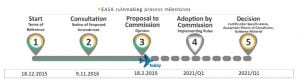
EASA has published its Opinion on the BIR, the Basic Instrument Rating. “Opinion” is the term for the proposal to the European Commission. If accepted (an Opinion usually is), it will become the legal basis for the BIR, expected to come info force in 2021.

The overall goal of the BIR is to make an instrument rating more accessible and affordable for GA pilots, with benefits of safety and usefulness of the PPL licence.

In summary, the Opinion states that:

  • The BIR can be attached to a PPL but not a LAPL
  • It will be “fully competence-based” with no minimum training hour requirements
  • Training will be divided into 3 / 4 separate modules
    1. basic instrument flight
    2. approaches & departures
    3. en route
    4. if applicable, asymmetric flight
  • There will be a single theory examination for each module
    • The exam will not re-test PPL level knowledge
    • Its “scope and depth” will be “broadly similar” to the FAA IR TK
    • The questions will be drawn from the existing question bank (the ECQB)
    • Only an ATO will be allowed to provide training for the BIR “for the time being”. EASA intends to monitor the implementation of Part-DTO in order to evaluate, at a later stage, whether DTO training scope could be extended to include further ratings like the BIR
  • The EIR will be withdrawn, though current EIR holders may continue to use their privileges indefinitely
  • The BIR will be valid for 1 year. Re-validation will be by proficiency check or 1 hour instruction (to be applied in alternate years)

The BIR is similar in concept to our IMC rating (IMCR or IR(R) ) with 2 very important additions:

  • It will allow flight in class A airways
  • It can be used all over Europe (but not outside, as ICAO compliance has not (yet) been demonstrated

Practical use

Like our IMCR, it will have higher minima than the full IR but these will be mandatory (those for the IMCR are recommendations):

  • On departure, visibility must be ≥ 1500 m & ceiling must be ≥ 600 ft or circling minimum, if higher
  • For approaches, the visibility minimum must be ≥ 1500 m & the pilot must add 200 ft to the (M)DH.
  • Before departure, the destination & any required alternates must be forecast to have a visibility of ≥ 1500 m and a ceiling of the highest of 600 ft, the circling minimum, and the increased (M)DH

What this means for us in the UK depends on the outcome of Brexit and whether the UK remains in the EASA ‘club’. If we do, the CAA intends that the BIR will replace the IMCR, and expects to offer ‘a generous credit’ for IMC rating holders. Because of the BIR’s greater scope, we should expect additional TK (theory knowledge and exam) requirements and a flight test. In the event of leaving EASA, the CAA is committed to retaining the IMCR or something similar.

Brexit notwithstanding, this is good news: the BIR is an affordable and accessible instrument rating that can be used all over EASA land. The only disappointment is that we are going to have to wait 2 years to get it.